





Electrical 120V To 24VDC Transformer
Electrical 120V To 24VDC Transformer, device that transfers electric energy from one alternating-current circuit to one or more other circuits, either increasing (stepping up) or reducing (stepping down) the voltage.

- Product Introduction
What Is Electrical 120V To 24VDC Transformer?
Electrical 120V To 24VDC Transformer, device that transfers electric energy from one alternating-current circuit to one or more other circuits, either increasing (stepping up) or reducing (stepping down) the voltage. Electrical 120V To 24VDC Transformers are employed for widely varying purposes; e.g., to reduce the voltage of conventional power circuits to operate low-voltage devices, such as doorbells and toy electric trains, and to raise the voltage from electric generators so that electric power can be transmitted over long distances. Electrical 120V To 24VDC Transformers change voltage through electromagnetic induction; i.e., as the magnetic lines of force (flux lines) build up and collapse with the changes in current passing through the primary coil, current is induced in another coil, called the secondary.
Advantages of Electrical 120V To 24VDC Transformer
Isolation and productivity
They are especially useful in providing electrical isolation between two circuits. There is no electrical connection between the Electrical 120V To 24VDC Transformer's primary and secondary windings. Electrical 120V To 24VDC Transformers work by transferring energy entirely through magnetic coupling, which makes them highly efficient and reliable.
Power transmission and distribution
Electrical 120V To 24VDC Transformer play a critical role in the power system, which includes power generation, transmission, and distribution. Electrical 120V To 24VDC Transformers make it possible to distribute electric power over large distances at a reasonable cost.
Stepping voltage and current up and down
Electrical 120V To 24VDC Transformers are vital in power distribution and electronic systems. Reducing the high voltage in transmission at substations makes it possible for end-users to get the increased amount of current they need.
Efficiency in terms of costs
A Electrical 120V To 24VDC Transformer is a great alternative to a more expensive option for voltage level change and isolation. The traditional Electrical 120V To 24VDC Transformer provides a cheap and very efficient voltage level transformation and isolation method.

Waterproof IP67 LED Driver 12v
Provides complete protection functions:input under voltage protection,output over voltage protection,output short circuit protection,over temperature protection with hysteresis.

24V 400W Waterproof Power Supply
It is fully enclosed aluminum shell, filled with heat-dissipating glue, waterproof grade IP67.Waterproof ip67 LED driver 24v can be used indoors and outdoors, such as door light, advertising display, etc.

LED driver 200w non-dimmable power supply 12v 110v 220v ac to 12v dc power supply

It is flicker-free output, thermal overload,over current, over voltage and short circuit protection built in to ensure security.
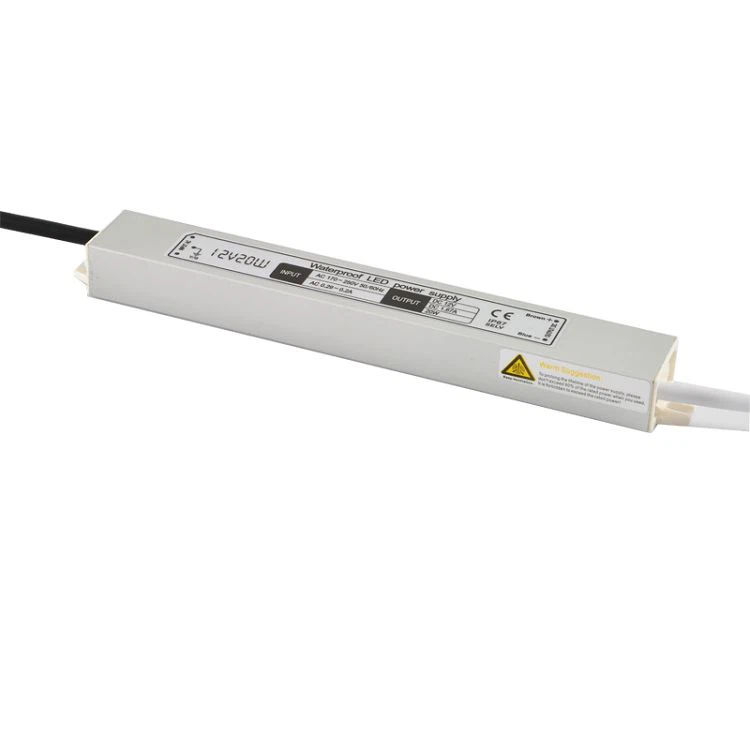
Aviation Aluminum Case: Small dimension, corrosion resistance, high heat resistance.IP67 Waterproof, suitable for Dry, Wet, even in a rain watery environment.

Led driver 12v 100w applications:12V switching power supply is the most widely used power supply product in LED advertising decoration engineering,mainly for power supply of LED modules.

12V 100W LED Waterproof Power Supply
The so-called single-ended circuit in the circuit means that the magnetic core of the high-frequency converter only works on one side of the hysteresis loop.

12V 200W IP67 Waterproof Power Supply
The post-stage output common mode inductor LM1 plays the role of EMI suppression, preventing the noise generated by the power supply from affecting the connected electronic products.

DC Regulated Power Supply 220V To 12V
The switch tube in the self-excited 12v 400w waterproof LED driver plays the dual role of switching and oscillation, and also saves the control circuit.
Why Choose Us
Rapid transportation
Complete packaging to ensure product quality and transport to the destination as soon as possible.
Our team
The company has a very young and highly educated team, including 8 senior engineers, more than half of whom are college graduates, and 60% of them are under 30 years old.
Strict management
Each of our products has strict quality control, semi-finished and finished product inspection, aging and parameter testing, and each process is monitored by engineers.
Excellent service
We will always provide you with technical support and free replacement of new products during the warranty period, so as to guarantee quality and service.
Laminated core type transformer
These are most commonly used transformers and are available from milliwatts to megawatts range. These types of transformers are used in electric power transmission and also in appliances to supply the low voltage.
Toroidal core transformers
This type of transformer offers many advantages over laminated core transformer that it provides quite and efficient operation with reduced stray or external magnetic fields. Due to less weight and small size, these are easily designed for any application operating either low or high voltage.
Auto transformer
Auto transformers are different from standard two or three winding transformer as it contains only a single winding that acts as both primary and secondary. In this, the part of this single winding is common for both primary and secondary and hence these are electrically connected (two windings are electrically isolated in case of traditional transformer).
Poly phase transformer
This type of transformer is commonly employed for three phase electric power systems such as power grids and transmission lines that they transfer large amounts of high voltages. These are most economical due to the widespread use of three phase ac generation, transmission, distribution and utilization systems. This type of transformer consists of three windings which are wound around three legged core and immersed in a tank.
Application of Electrical 120V To 24VDC Transformer
Voltage regulation
Electrical 120V To 24VDC Transformers are used to step up or step down the voltage level of an alternating current (AC) in order to match the voltage level of the load. This enables efficient and stable transmission and distribution of electricity over long distances.
Power distribution
Electrical 120V To 24VDC Transformers are widely used to distribute electricity to homes, businesses, and other customers. They are used to transform high-voltage power from transmission lines to lower-voltage power that is suitable for distribution to customers.
Isolation
Electrical 120V To 24VDC Transformers are used to provide electrical isolation between different parts of a circuit. This can be important for safety reasons, as well as to prevent electrical interference between different circuits.
Load balancing
Electrical 120V To 24VDC Transformers can be used to balance the load on different parts of the electrical grid. This can help to prevent overloading of the grid, and improve the overall efficiency and reliability of the electrical system.
Power factor correction
Electrical 120V To 24VDC Transformers can be used to correct the power factor of a load. The power factor is the ratio of real power (the power used by the load) to apparent power (the total power supplied to the load). A low power factor can lead to reduced efficiency, increased power losses, and higher costs.
Electric power generation
Electrical 120V To 24VDC Transformers are used in power generation plants to step up the voltage level of the generated power, making it possible to transmit the power over long distances with minimal losses.
Components of Electrical 120V To 24VDC Transformer
Core
The core is the central part of a Electrical 120V To 24VDC Transformer and is made of laminations of high-grade silicon steel. The core's main function is to provide a low reluctance path for the magnetic flux generated by the Electrical 120V To 24VDC Transformer's windings. The core's quality directly affects the Electrical 120V To 24VDC Transformer's efficiency and performance.
Windings
The windings are the coils of wire wrapped around the core. There are two types of windings: primary and secondary. The primary winding is connected to the power source, while the secondary winding is connected to the load. The number of turns in the primary and secondary windings determines the Electrical 120V To 24VDC Transformer's voltage ratio.
Insulation
Insulation is essential to prevent electrical breakdown between the windings and the core. Insulation materials used in Electrical 120V To 24VDC Transformers include paper, pressboard, and oil-impregnated cellulose. The insulation's quality affects the Electrical 120V To 24VDC Transformer's lifespan and performance.
Tap changer
The tap changer is a device used to adjust the Electrical 120V To 24VDC Transformer's output voltage. It is usually located on the high-voltage winding and allows for small adjustments to be made in the voltage ratio. Tap changers can be either manual or automatic.
Tank (When LiquidFilled)
The tank is the outer shell of the Electrical 120V To 24VDC Transformer and is usually made of steel. Its main function is to protect the Electrical 120V To 24VDC Transformer's components from environmental factors such as moisture and dirt. The tank also contains the Electrical 120V To 24VDC Transformer's oil, which is used for insulation and cooling.
Bushings
Bushings are insulating devices used to connect the Electrical 120V To 24VDC Transformer to the power system. They are usually made of porcelain or polymer and are located on the tank's sides. Bushings provide a safe and reliable means of transferring power to and from the Electrical 120V To 24VDC Transformer.
Cooling system
Electrical 120V To 24VDC Transformers generate heat during operation, and a cooling system is necessary to prevent overheating. The most common cooling systems are oil-immersed and air-cooled. Oil-immersed Electrical 120V To 24VDC Transformers use oil as a coolant and insulator, while air-cooled Electrical 120V To 24VDC Transformers use natural air cooling as well as fans (forced air) to dissipate heat.
Insulating oil
Insulating oil is one of the most important components within a Electrical 120V To 24VDC Transformer that acts as both an electrical insulator and coolant to dissipate heat losses. This oil is seen in 11kV or higher voltage Electrical 120V To 24VDC Transformers, placed in the tank where the Electrical 120V To 24VDC Transformer core is placed. It is not required in low voltage Electrical 120V To 24VDC Transformers as the heat dissipation in such Electrical 120V To 24VDC Transformers is very low. Insulating oil is obtained by fractional distillation and subsequent treatment of crude petroleum.
Insulating paper
Insulating paper is made up of vegetable fibers that are felted together to form a sheet. The fibers are obtained from plants like cotton, straw, hemp, manila, and coniferous trees. When this insulating paper is put into the insulating oil under vacuum, it attains extremely high electric strength.

Insulating tape
As the name itself says, insulating tape is used for various taping purposes. These are available in a variety of forms like cotton tapes, woven tapes, glass woven tapes, and phenol laminated paper base sheet. These tapes are used in areas where high strength is required. They are also used for banding of Electrical 120V To 24VDC Transformer cores.
Pressboard
Used in the electrical, mechanical, and thermal designing of Electrical 120V To 24VDC Transformers, the pressboard is also made up of vegetable fibers that contain huge amounts of cellulose. These pressboards can be moulded into any shape to be used in Electrical 120V To 24VDC Transformers; the most commonly seen shapes being angle rings and caps.
Wood-based laminates
Wood-based laminates are made from selected veneers that are obtained from various timbers. The veneers are first dried, and then are partially/completely saturated naturally. Such laminates are used in areas that require higher mechanical and lower electric strength. They are used in making a variety of components like coil clamping rings, cores, yokes, and supports.
How to Maintain Electrical 120V To 24VDC Transformer
Keep it clean
Dust and dirt can accumulate on Electrical 120V To 24VDC Transformers over time, which can lead to overheating and reduced efficiency.
Regularly clean the transformer's exterior using a soft brush or cloth to remove dust and debris.
Ensure proper ventilation
Transformers generate heat during operation, so it's important to provide adequate air circulation around the device.
Avoid placing transformers in enclosed spaces or near heat sources, and ensure there is sufficient clearance around the unit for proper airflow.
Inspect regularly
Periodically inspect your Electrical 120V To 24VDC Transformer for signs of wear, corrosion, or damage.
Check for loose connections, frayed wires, or any other visible issues that could impact performance or safety.
Monitor temperature
Overheating can shorten the lifespan of your Electrical 120V To 24VDC Transformer and cause damage.
Use a thermometer or infrared camera to monitor the temperature of your transformer, and take action if temperatures exceed the manufacturer's recommendations.
Avoid overloading
Overloading a transformer can lead to excessive heat generation and potential failure.
Always adhere to the transformer's capacity limits and avoid connecting devices with higher power requirements than the transformer can handle.
Regular maintenance
Schedule routine maintenance checks with a professional technician to ensure your Electrical 120V To 24VDC Transformer is functioning properly.
This may include checking for loose connections, testing insulation resistance, and verifying that all safety features are operational.
Replace worn parts promptly
If you notice any signs of wear or damage on your transformer, replace the affected parts as soon as possible to prevent further issues or damage.
Proper grounding
Ensure that your Electrical 120V To 24VDC Transformer is grounded correctly according to the manufacturer's specifications.
Proper grounding helps protect the transformer from electrical surges and reduces the risk of electrical shock.
Use a surge protector
Connecting your transformer to a surge protector can help protect it from power surges and voltage spikes, which can damage sensitive components.
How to Choose a Electrical 120V To 24VDC Transformer
Voltage requirements
Determine the input and output voltage requirements. Choose a step-up, step-down, or isolation Electrical 120V To 24VDC Transformer based on whether you need to increase, decrease, or maintain the same voltage.
Power rating
Identify the power rating needed, usually given in kilovolt-amperes (kVA). The Electrical 120V To 24VDC Transformer should have a power rating that meets or exceeds the total power demand of the system it will serve.
Phase RequirementDecide between single-phase and three-phase Electrical 120V To 24VDC Transformers, depending on the nature of the load and the power supply system.
Load type
Consider the type of load (resistive, inductive, or capacitive) as it affects the Electrical 120V To 24VDC Transformer's performance. Some loads may require specific Electrical 120V To 24VDC Transformer designs, like those for high inrush currents.
Frequency
Ensure that the Electrical 120V To 24VDC Transformer is compatible with the system's frequency (usually 50 Hz or 60 Hz).
Cooling method
Choose between air-cooled (dry type) or oil-cooled (liquid-filled) Electrical 120V To 24VDC Transformers based on the environment and cooling efficiency required.
Insulation and impedance
Check the insulation class to ensure it can withstand the operational temperatures. Impedance affects voltage regulation and the fault level; select based on application requirements.
Efficiency
Higher-efficiency Electrical 120V To 24VDC Transformers reduce energy losses but may cost more upfront. Consider long-term energy savings versus initial costs.
Environmental conditions
Account for the operating environment, including temperature, humidity, and potential exposure to chemicals or salt (in coastal areas). Certain environments may require Electrical 120V To 24VDC Transformers with specific enclosures or protective measures.
How the Electrical 120V To 24VDC Transformer Works
An Electrical 120V To 24VDC Transformer, also known as an electronic ballast, works by using electronic components to control the current and voltage in a fluorescent lamp or other types of lighting.
The Electrical 120V To 24VDC Transformer typically contains several key components, including a power rectifier, a high-frequency oscillator, and a power inverter.
The power rectifier converts the incoming AC power into DC power, which is then fed into the high-frequency oscillator. The oscillator generates a high-frequency AC signal, which is fed into the power inverter.
The power inverter converts the high-frequency AC signal into a lower-frequency AC signal that is suitable for driving the lamp. The Electrical 120V To 24VDC Transformer also includes control circuits that monitor the lamp current and voltage and adjust the output of the inverter accordingly to maintain a constant light output.
The Electrical 120V To 24VDC Transformer also includes a protection circuit that limits the inrush current of the lamp, this is to protect the lamp from the high current at start-up and also to protect the Electrical 120V To 24VDC Transformer from damage.
The Electrical 120V To 24VDC Transformer has advantages over traditional electromagnetic transformers, such as energy efficiency, control of light output, compactness, and low heat dissipation.

Key Safety Tips for Electrical 120V To 24VDC Transformers
Inspect your Electrical 120V To 24VDC Transformer thoroughly to prevent or minimize breakdowns. Before installation, monitor your Electrical 120V To 24VDC Transformer by checking for any burnt odor, damaged power cords and connectors or any parts that are improperly installed.
Keep the power off when working on the Electrical 120V To 24VDC Transformer. Make sure there is zero electrical leakage or continuity between the current source and the system.
Use protective equipment and pay close attention to specific ratings for the Electrical 120V To 24VDC Transformer's voltage output. Keep over current protection of conductors and circuits set to the manufacturer's standards.
Learn the maximum voltage requirements of your Electrical 120V To 24VDC Transformer. Be careful of system overload from a single Electrical 120V To 24VDC Transformer, with the understanding that multiple Electrical 120V To 24VDC Transformers help balance the impedance of each load.
Keep spare nuts, bolts and other objects away from your work, so that they don't touch or fall into the Electrical 120V To 24VDC Transformer.
Be certain that your Electrical 120V To 24VDC Transformer is grounded, which will prevent static electricity and protect the coils from contacting the enclosure or core.
Always keep your Electrical 120V To 24VDC Transformer and all of its components dry and free from any kind of moisture or water. To protect unskilled onlookers, set up caution signs that warn people to keep away from danger.
Our Factory
Dongguan Shengfeng Electronic Technology Co., Ltd is a high-tech enterprise specializing in development and production of 5v/12v/24v/36v/48v/60v power supply.Products are widely used in computer,miner,LED lighting,CCTV camera,3D printer,Audio,water pump,game machine,servo motor, stepper control,equipment and machine with good quality.And they are sold to Europe, North America, Asia and other areas.Each of our products has strict quality control, semi-finished and finished products inspection, burn-in and parameter testing, and each process is monitored by engineers.In addition, we also have high-quality packaging to protect the power supply from damage during shipping. Once encountered product quality problems, we will always provide you with technical support, and free replacement of new products within the warranty period. Therefore, quality and service can be guaranteed.


Company Certificate
Our company has passed ISO9001, UK,UL,SAA, CE, FCC,RoHS certification


